|
|
Meaning of Money
Part 1
The three uses of money.
|
a. As a store of wealth
b. As a medium of exchange
c. As a measure of value
|
|
a. Money as a store of wealth
|
As a further division there are three types of wealth to be stored.
One. Physical Wealth (Capital)
Two. Human Capital
Three. Spiritual Wealth
|
Very little of any of the three types of wealth is stored as money but we will examine each one.
|
One. Physical Wealth (Capital)
|
highways
|
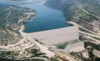
dams
|
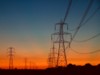
power lines
|

wind mills
|
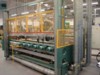
plant machinery
|
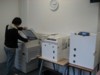
office equipment
|
factories
|
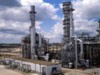
refineries
|
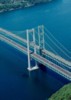
bridges
|
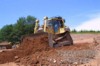
road machinery
|
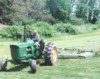
farm equipment
|
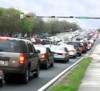
cars and highways
|
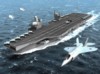
ships and planes
|
tanks
|
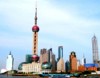
buildings
|
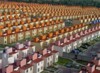
houses
|
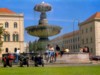
schools
|
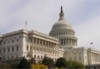
government
buildings
|
and other innumerable things-
|
which means - simply too many -
to number or mention.
|
|
Most individuals store most of their physical wealth in the form of homes, furnishings, cars, and various types of equipment which may vary from boats and trailers to tractors, buildings and animals.
The physical wealth or capital of a nation is NOT stored in currency accounts but rather in real plants, buildings, roads, bridges, houses, cars, equipment, dams, railways, and so on and on. This is the true capital of a nation. Money, which some people mistakenly think of as capital, is not the store of that wealth and is at best - simply an accounting system of that wealth.
|
|
Some economists will define capital slightly differently, saying that it is produced goods that are not consumed but that are used instead in the production of other goods. The example often given is wheat that is not used to make flour - but rather is put aside as seed to grow another crop. This point of view puts great emphasis on savings and savings in the sense of acquiring physical goods (such as plant and equipment and raw materials) for future production is important in any society. However, in a society that has idle plants sitting about (and idle labor) the problem is not one of saving or shortage of real capital but rather a misconception about the nature of money.
Real capital is certainly not money. No matter how much money or gold a country had piled that would not mean that it had real capital like the items mentioned above. Some economists would make a sharper division between goods for production and goods for consumption. They might dispute putting private homes and cars into the capital account of a nation. But once again, it does not take much of a shift in thinking about the real capital of a country to see how the houses to house the workers, the cars to transport them, and the roads for them to drive on - are all a part of the real capital of the nation. And yes also, the armies to protect them.
|
---------------
For most of the wealth that a nation has, there is nowhere coin or currency that represents that wealth. That physical wealth may be denoted in a currency value but the designated value may go up (inflate) or go down (deflate) so that any of the physical items are supposedly worth double or half what they were at some previous time. This is simply not true. A house still gives the same shelter and a car the same transportation, and that is its real value, no matter what currency value is attributed to it. The relative values between various physical items can have real effects - but not just their denomination in money terms.
|
|
|

medicine/surgery

team sports

primary education

personal sports
rapid transportation

distance moving
|
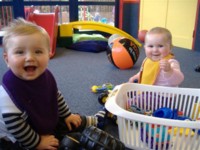
Two. Human Capital
In my younger days, when I first studied economics, it was recognized that real capital was plant and machinery but less thought was given to human capital other than by the thought of those considered humanists, socialists, or communists. Still, human capital is equally, if not more important to the wealth of a nation as is its physical capital.
Just as with physical capital a nation needs to be concerned about the age and health of its human capital as well as its level of education, its mobility and its location. It also needs to be concerned that the quantity of human capital is balanced to the available physical capital, and particularly to that category that we call land. This human capital is certainly not stored in money.
As with physical capital, a nation can import and export human capital. In this case we call it immigration. But once again, as with physical capital, it is a real thing and one cannot just move it about from one account to another as they do money.
To deliver physical capital to a country that does not have the human capital to utilize it will just result in the waste of that physical capital. The physical capital must be accompanied by the human capital of managers, engineers, technicians and trained workers.
|
art and music

infant care

health
employment opportunities

higher education
military
|
------
|
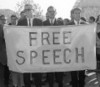
Freedom of Speech
and Press
|
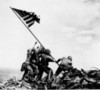
bravery
|

virtuous
motherhood
|

justice
|
Freedom of Religion
|
Right to Opinion

Honest judges
compassion

innocence

mercy
beauty
disaster response
|
Three. Spiritual Wealth
As short shift as my economic teachers gave to the subject of human capital back in my college days in the McCarthy era (it then being considered the misdirected mutterings of socialists and communists) a much greater degree of still less concern / awareness about the importance of spiritual capital is present in the thinking of most modern economists who consider that to be the domain of theologians and not at all of their discipline.
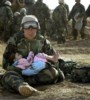
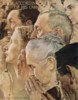
The most important wealth of a nation is its Spiritual Wealth. The honesty, integrity, industriousness, humanity, morality, happiness, dedication, purpose of its citizens. This national treasure and value is certainly not stored in money.
No matter how much material physical capital a nation may have, nor how intellectually trained its human capital may be, if it does not have spiritual capital it will fail. Judges and Civil Servants that accept bribes, merchants that falsely represent their products, do not give fair measure and who do not honor their contracts, labor and employees that are not honest and industrious - these and numerous other shortcomings can doom to failure the enterprise of a nation.
|
|
Humility
before God
Native religion

Hindu religion

Judaism

Buddhist

Christianity

Islam
|

Sikh Religion
|
Taoism
|

Zorastrianism
|

Racial Unity
|

Baha'i
|
|
------
So, when we come down to it, we see that very little of the wealth of a nation is stored in money - and if you think about it as an individual you will realize that very little of what you consider as important to yourself - therefore your health, your family and personal relationships, your mental well being, thoughts and ideas, and hopefully your relationship to life, is stored in money.
Therefore we can conclude that money can be 'a' store for 'some kinds of wealth' but it is not 'the only' store of even one kind of wealth and not even a store at all for the most important kinds of wealth.
|
b. As a medium of exchange
|
|
Much exchange, indeed most exchange, takes place without the medium of money. Some reader may object - "but we are only talking about 'economic' goods". Even if we were to make a further restriction and say that - 'money is the medium of exchange for economic goods in the market place' this still would not be quite true because there can be barter and other means for exchange.
Much if not most exchange, takes place without the medium of money, and I am not talking here about just gifting. There are other forms of social contract outside the economic market place and in many of these we feel that they are too important to have a monetary value put on them, although many of the services could be purchased such as through prostitutes, nannies, contract killers, maids, care givers, and the list goes on and on.
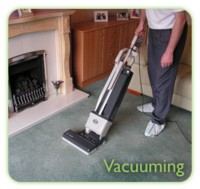
For a price we could take in each other's laundry, cook each other's meals, clean each other's houses, watch over each other's children and elderly parents, do each other's gardening - but while that might increase the monetary accounts of the nation it would not increase the wealth of the nation.
The amount of volunteer work in churches, hospitals, scouting and youth organizations, even among firefighters and other groups is an immense asset to a nation that is not measured in the monetary accounts of the nation's wealth. Indeed the social contribution of wives, mothers, fathers, aunts, uncles, friends, grandparents and siblings is incalculable.
|


|
|
------
|
c. As a measure of value
|

|
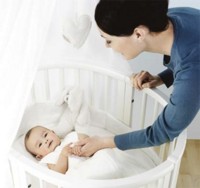
One of the problems in measuring the value of a nations wealth is that there is not a good mechanism for evaluating the care that mothers and parents give to children or adults to their spouses and the elderly. The value of home gardens could be predominant in the measure of a nations agriculture while alternatively, as we noted above, the measure of economic activity could be greatly increased simply by everyone taking in everyone else's wash. One must ask whether home cooked meals are worth less than store bought ones?
How are we to measure monetarily the value of soldiers laying down their lives for their nation or the dedicated saints who live lives in the service to the rest of humanity? These and many other examples can be thought of that 'money can't buy' - or at least that money shouldn't be able to buy, such as justice in the courts and fulfillment of duty by government officials.
Money is a very poor measure of value not only for those things that we hold most near and dear to us, but also for those things for which we exchange it in the economic market place. Surely you can think of many examples where the utility / importance is very great for some item that you purchase and yet that item costs very little in terms of money. On the other hand you must surely see many instances where items cost a great deal more but do not have near the usage or utility.
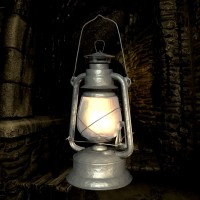
I could lengthily give many examples - but just think for a moment about any area of life. Take clothing for example, in how if you are barefoot that a good pair of sturdy work shoes - or even the least little flip-flops might have so much value to you compared to shoes that might cost hundreds of dollars. Or if you were starving how the simplest meal might be beneficial compared to one costing a hundred times as much. Or, when you are walking a long distance how any conveyance would be most beneficial compared to the value of the most luxurious means of transportation. Again, if you were in the dark, would not the simplest working light bulb be of more value than some lamp costing hundreds of dollars. The cross values between dissimilar items becomes even more difficult. For example, that light bulb and a child's toy. Circumstance is more of a major determinate of value rather than the price tag upon an item.
|
|
------
Conclusion to Part 1:
In conclusion to part one of this essay we can therefore say that while we use money as a store of wealth, a medium of exchange, and as a measure of value, MOST capital - physical, human and spiritual, is stored otherwise. A basic concept to grasp is that there is NOTHING produced without including / using ALL THREE of the 'real' types of capital - but the real types of capital are NOT 'money'.
Click here to:
go back to the Index
or to go on to Part 2
|